
Doneila L. McIntosh
College of Family and Consumer Sciences
Assistant Professor in Couple and Family Therapy
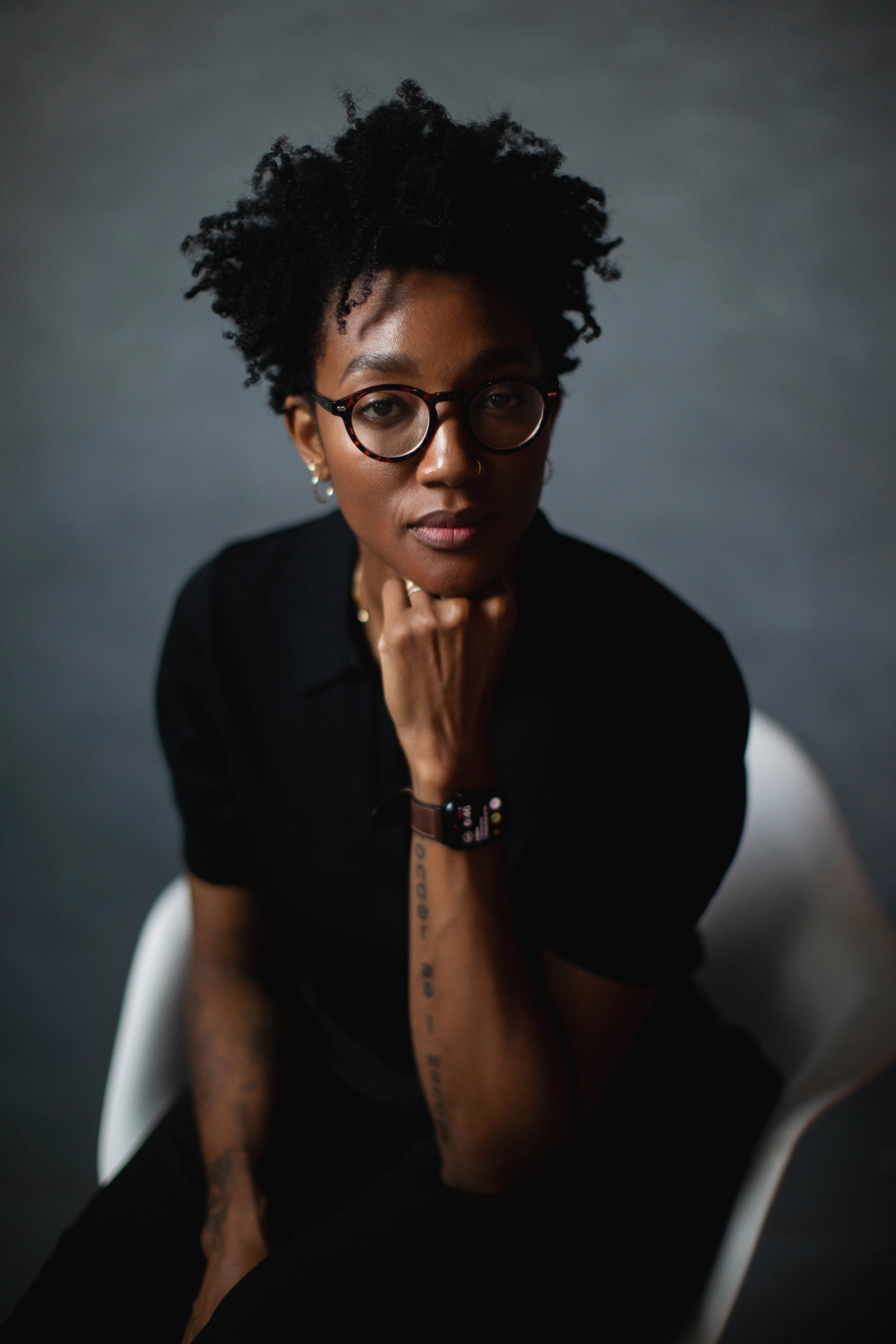
Dr. Doneila L. McIntosh (she/they) is an Assistant Professor in the Department of Human Development and Family Science (HDFS) and core faculty in the Couple & Family Therapy Doctoral Program.
Family Science Center (House A)
403 Sanford Dr.
Athens, GA 30602
Education
| Degree | Field of Study | Institution | Graduation |
|---|---|---|---|
| Ph.D | Family Social Science, specialization Couple and Family Therapy | University of Minnesota | 2025 |
| M.A. | Counseling Psychology | Saint Thomas University | 2021 |
| M.Div | Theological Studies | Bethel Theological Seminary | 2013 |
| B.A. | Philosophy | University of Minnesota | 2008 |
Research
My research examines family processes and well-being in Black populations across the lifespan, with particular attention to couples, adults, children and adolescents, and parent-child dyads. Broadly, I am interested in how contextual stressors shape family dynamics, mental health, relational functioning, and pathways of resilience. My work investigates how experiences such as exposure to violence, traumatic loss, behavioral health concerns, chronic stress, and structural vulnerability influence the ways individuals and families communicate, cope, grieve, parent, maintain relationships, and make meaning across developmental stages.
A central and growing area of my research focuses on grief and loss as lifelong, relational, cultural, and embodied experiences. I am interested in both death-related and non-death-related losses, including bereavement, traumatic loss, ambiguous loss, disenfranchised grief, suicidality and suicide-related loss, and other life transitions that alter identity, attachment, roles, and expectations for the future. My research is grounded in the belief that grief is not only an individual emotional response, but also a family and community process that unfolds over time. Loss can reorganize family systems, affect parent-child relationships, shape couple functioning, disrupt developmental trajectories, and influence mental and relational health long after the initial event.
My research is especially concerned with the lifelong impact of grief and loss among Black individuals, families, and communities. I examine grief within broader contexts of racialized stress, cumulative trauma, community violence, health disparities, systemic inequity, and unequal access to culturally responsive care. I am particularly interested in how traumatic bereavement and other significant losses shape grief expression, coping, meaning-making, mental health, relational functioning, parenting, couple processes, and help-seeking. Rather than treating trauma and grief as separate experiences, my work considers how they intersect in lived experience and how families adapt when loss is accompanied by fear, shock, injustice, guilt, anger, or unanswered questions.
I also seek to integrate biological, psychological, relational, and cultural understandings of grief. While the neurobiology of grief is an emerging area of interest for me, I am particularly interested in how embodied experiences of grief may intersect with attachment, stress, emotion regulation, and social connection. Understanding grief as both embodied and relational can help explain why loss may feel persistent and disorienting, especially when it is traumatic or relationally significant. At the same time, my research attends to protective processes such as spirituality, cultural identity, family cohesion, community care, storytelling, ritual, and intergenerational resilience, with the goal of informing culturally responsive assessment, intervention, and family-centered care.
My research is also concerned with evidence-based practices for grief and loss, while recognizing that existing models do not always fully address the needs of Black individuals, families, and communities impacted by traumatic bereavement, racialized loss, or non-death-related grief. I am interested in identifying which interventions are effective, for whom, under what conditions, and how these practices can be adapted without losing their core mechanisms. At the same time, I value practice-based evidence as a necessary complement to evidence-based practice. Clinical wisdom, community knowledge, client feedback, and real-world patterns of care can reveal gaps in existing interventions and generate new research questions. This is especially important when working with populations and grief experiences that have been underrepresented in traditional research.
Ultimately, my program of research seeks to bridge scholarship, clinical practice, and community impact. I aim to generate knowledge that improves how clinicians, educators, health systems, faith communities, and community organizations understand and respond to grief, trauma, and family distress. My goal is to contribute to grief-informed and trauma-informed frameworks that are developmentally sensitive, culturally responsive, relationally grounded, and useful in real-world settings. By examining grief and loss across the lifespan and within family and community systems, my research seeks to support more ethical, effective, and compassionate care for individuals, families, and communities navigating death-related and non-death-related loss.
Teaching
My teaching philosophy is rooted in cultural humility, critical reflection, and the belief that higher education should help students think deeply for themselves, about themselves, their communities, and the systems that shape human development, health, and well-being. I approach teaching as an ongoing practice of openness, self-awareness, reflection, and critique. In my classroom, students are not passive recipients of information; they are active contributors to a collective learning environment where lived experience, cultural knowledge, scholarly evidence, and developing professional perspectives can be placed in conversation with one another.
My teaching is also influenced by bell hooks’ Teaching to Transgress, particularly her view of education as a practice of freedom. I understand the classroom as a space where students and teachers can engage in mutual learning, critical consciousness, and transformation. This requires students to question dominant assumptions, examine systems of power, and connect academic material to lived realities. Across my teaching, I ask students to consider how race, culture, class, gender, family structure, trauma, health inequities, and social context shape individual and relational outcomes. In doing so, I aim to support students in developing the intellectual and ethical tools necessary to work with individuals, families, and communities in ways that are culturally responsive, critically informed, and socially responsible.
Because I view learning as a collective process, I expect students to attend class prepared to engage with assigned materials, their peers, and the broader questions raised by the course. Preparation is not only an individual responsibility; it is also a contribution to the learning community. When students arrive having read, reflected, and considered their questions, they help create the conditions for deeper dialogue, stronger critical thinking, and more meaningful engagement. I design class sessions to move beyond memorization by using discussion, case application, reflective writing, peer feedback, and applied exercises that encourage students to analyze, synthesize, and apply course concepts.
Transparency is central to my work as an educator. I prioritize clear expectations, accessible course design, and transparent grading criteria. I provide students with a comprehensive syllabus, detailed assignment descriptions, and rubrics that clarify the goals, expectations, and evaluation criteria for each assignment. Before major deadlines, I dedicate class time to reviewing assignment expectations and discussing how the rubric will be applied. This approach reduces ambiguity, supports student confidence, and allows students to focus their energy on demonstrating learning and critical engagement. I view assessment as part of the learning process rather than merely a measure of performance.
Ultimately, my goal as an educator is to cultivate a learning environment that is rigorous, reflective, culturally responsive, and transformative. I want students to leave my courses with a stronger grasp of key concepts and a deeper capacity for critical inquiry, humility, ethical engagement, and social responsibility. Whether students pursue clinical practice, research, policy, advocacy, or community-based work, I hope they develop the ability to examine systems of power, listen deeply to the experiences of others, and apply knowledge in ways that advance equity, healing, and collective well-being.
Awards
| Award Name | Awarded By | Year Awarded |
|---|---|---|
| John L. and Harriette P. McAdoo Dissertation Award | National Council on Family Relations (NCFR) | 2024 |
| Ron Keith Barrett Multicultural Presentation Award | Association for Death Education and Counseling (ADEC) | 2023 |
Areas of Interest
Family Processes and Family Well-Being
Black Families, Couples, and Communities
Grief, Loss, and Bereavement Across the Lifespan
Traumatic Bereavement and Complicated Grief
Death-Related and Non-Death-Related Loss
Neurobiology of Grief and Trauma
Mental Health and Behavioral Health in Black Populations
Exposure to Violence and Community Violence
Culturally Responsive Grief and Trauma Interventions
Evidence-Based Practices for Grief and Loss
Practice-Based Evidence in Grief, Trauma, and Family Care
Spirituality, Cultural Identity, and Resilience
Community-Based and Family-Centered Approaches to Care
Advising
I am accepting undergraduate research advisees for the Fall 2026 semester.
Current Classes
HDFS 8050 Mechanisms of Change in CFT
HDFS 9070 Practicum
HDFS 3920 Issues in Family Systems
HDFS 3000 Introduction to Behavioral Health
Current Research
1. Clergy, grief, and referral to clinical care (currently interviewing participants with colloborator).
One current project is a qualitative study with clergy focused on grief and loss within faith-based communities. This study examines how clergy understand and respond to grief among parishioners, their perceived preparedness to address bereavement and other forms of loss, their knowledge of prolonged grief disorder and complicated grief, and finally, how clergy determine when grief-related concerns may require referral to clinical care. Given the central role that faith leaders often play in supporting individuals and families after loss, this work seeks to better understand the opportunities and limitations of faith-based grief support, as well as the resources clergy may need to respond effectively and ethically.
2. LGBTQ+ and BIPOC adults, grief, identity, and relational functioning (data already collected; data analyses in progress).
A second area of current work uses a dataset with LGBTQ+ and BIPOC adults to examine grief, loss, relational functioning, cultural and racial identity, disenfranchised grief, and related psychosocial outcomes. This project allows me to explore how identity, belonging, marginalization, and relational context shape the ways adults experience, express, and cope with loss. I am particularly interested in how culturally specific and identity-based experiences influence grief outcomes, social support, meaning-making, and relational well-being.
3. Emerging adults, grief, non-death related loss, trauma, and access to care (development of pilot study in progress Fall 2026).
I am also developing a pilot mixed-methods study with emerging adults focused on grief, non-death-related loss, trauma exposure, accessibility of care, and general understandings of grief, trauma, and mental health. This study is designed to examine how emerging adults conceptualize loss and trauma, where they turn for support, what barriers they experience in accessing care, and how their developmental stage shapes grief-related needs.
Journal Articles
Ajayi, A. A., Grier-Reed, T., Wade, B., Oteju, O., Bahr-Fite, A. V., Baker, A. C., & McIntosh, D. L. (2026). Racialized labor among Black women: Implications for counseling, research, training, and advocacy. The Counseling Psychologist, 0(0). https://doi.org/10.1177/00110000261445121.
Asiimwe, R., McIntosh, D. L., Nyambura, R. G., & Kasujja, R. (2026). Cultural Threads: An Afrocentric paradigm for integrating social justice principles in the practice of family therapy in Africa. Journal of Marital and Family Therapy, 52(1), e70091. https://doi.org/10.1111/jmft.70091.
Hubbard, A., Bryant, C.M., Harris, S., Rineman, R., McIntosh, D.L. (2025). Identifying informal help-seeking patterns in African American couples. Journal of Marital and Family Therapy.
McIntosh, D.L., Tate, A.D., Trofholz, A., Berge, J.M. (2024). Child health and psychosocial wellness in the context of maternal role overload and depression: A latent profile analysis. Family Relations. Advance online publication. https://doi.org/10.1111/fare.13091.
McIntosh, D.L., Pasco, M. (2024). Unpacking the social construction of blame: A qualitative exploration of race, place, and accountability in the aftermath of George Floyd’s death. The Journal Community and Applied Social Psychology, 34 (3), e2885. https://doi.org/10.1002/casp.2885.
Mussa, K., McIntosh, D.L., Tadros, E. (2024). The impact of social support and social strain on older adults with depression. The Family Journal. Advance online publication. https://doi.org/10.1177/10664807241276877.
McIntosh, D.L.*[1], Wang, G.* (2024). Assessments for multi-heritage couple therapy: A scoping review of existing tools. Journal of Marital and Family Therapy, 50 (3),611- 629. https://doi.org/10.1111/jmft.12708.
Mussa, K., Bryant, C., McIntosh, D. (2023). Passionate love: A study of older African American couples. Journal of African American Studies, 27(1), 103-111. https://doi.org/10.1007/s12111-023-09612-x.
McIntosh, D., Tate, A.D., & Berge, J.M. (2021). Exploration of witnessing community violence and recent death on child behavioral outcomes. Journal of Child and Adolescent Mental Health, 33(1-3), 42-54. https://doi.org/10.2989/17280583.2023.2270724.
Mendenhall, T.J., McIntosh, D., Hottinger, D. (2021). Walking-the-Walk: Attending to the “spiritual” in medical family therapy’s Biopsychosocial/Spiritual Care. Contemporary Family Therapy, 44(1), 44–54. https://doi.org/10.1007/s10591-021-09619-0.
[1] Co-First Authors. See Lapidow, A., & Scudder, P. (2019). Shared first authorship. Journal of the Medical Library Association,107(4), 618-620. https://doi.org/10.5195/jmla.2019.700.
Publications
Book Chapters
McIntosh, D.L. (2026) Spirituality and Ritual in Response to Social Injustice. In D. L. Harris, T. C. Bordere, & L. McLean (Eds.), Handbook of social justice in loss and grief: Exploring diversity, equity, and inclusion (2nd ed.) https://www.taylorfrancis.com/chapters/edit/10.4324/9781003541592-30/spirituality-ritual-response-social-injustice-doneila-mcintosh
Bryant, C.M., McIntosh, D.L., Mussa, K. S. (2026). Examining intimate relationships across Black populations with a focus on context: Socioeconomic status and racial discrimination. In A. L. Vangelisti & D. Perlman (Eds.), The Cambridge handbook of personal relationships (3rd ed.). Cambridge University Press.
https://doi.org/10.1017/9781009381949