
Advancing behavioral health and developmental disability research, education, service, and community partnership to strengthen systems of care and improve the lives of individuals, families, and communities across Georgia.
Overview
The David Ralston Institute for Behavioral Health and Developmental Disabilities advances research, education, service, and innovation to strengthen behavioral health and developmental disability systems across Georgia. Through interdisciplinary collaboration and community partnership, the Institute supports workforce development, applied research, policy and program evaluation, and public engagement to improve the well-being of individuals, families, and communities.
Mission
The mission of the David Ralston Institute for Behavioral Health and Developmental Disabilities is to advance behavioral health and developmental disability research, education, service, and community partnership to improve the lives of individuals, families, and communities across Georgia.
The Institute brings together the long-standing work of the Center for Human Development and Disability, with more than 50 years of continuous funding and programming, and Georgia’s statewide behavioral health initiatives to strengthen systems of care, support workforce development, inform policy and practice, and expand opportunities for individuals across the lifespan.
Through interdisciplinary collaboration and engagement with communities, public agencies, providers, and individuals with lived experience, the Institute conducts applied research, training, evaluation, technical assistance, and public service aimed at addressing Georgia’s most pressing behavioral health and developmental disability challenges.
Building workforce connections
Georgia is facing a critical behavioral health and developmental disability workforce shortage, particularly in mental health, substance use services, and supports for individuals with intellectual and developmental disabilities. Workforce challenges are especially acute in rural and underserved communities, where many individuals and families experience significant barriers to accessing care and support services.
The David Ralston Institute for Behavioral Health and Developmental Disabilities is committed to strengthening Georgia’s workforce pipeline by preparing the next generation of professionals to serve individuals, families, and communities across the state. Through interdisciplinary education, training, mentorship, internships, practicum opportunities, and community partnerships, the Institute connects students and emerging professionals with real-world learning experiences and career pathways in behavioral health and developmental disability fields.
In collaboration with universities, public agencies, healthcare systems, schools, community organizations, and service providers, the Institute works to expand workforce capacity, support professional development, and promote innovative solutions that improve access to high-quality services throughout Georgia.
Clearinghouse
The Ralston Institute Clearinghouse advances data-informed policy, planning, and systems improvement at the intersection of behavioral health, developmental disabilities, and the justice system across Georgia. The Clearinghouse serves as a statewide hub for behavioral health and justice-related information, collaboration, and innovation. The Clearinghouse provides access to data resources, research findings, best practices, policy guidance, and evaluation support that help strengthen systems of care, improve cross-system coordination, and promote more effective and equitable outcomes for individuals, families, and communities.
Through partnerships with state agencies, local communities, courts, providers, researchers, and individuals with lived experience, the Clearinghouse works to support evidence-informed decision-making, evaluate programs and initiatives, identify emerging needs and trends, and assist communities in developing and implementing effective behavioral health and justice strategies across Georgia.
-
About David Ralston
-
The River’s Crossing building, built with federal funds, opens its doors in September. The Athens Unit of the Georgia Retardation Center, later to become the Institute on Human Development and Disability, provides:
Classroom education for children with disabilities from 28 northeast Georgia counties. Three classrooms are administered by FACS and five by the UGA College of Education.
Overnight accommodations for children who live too far away to commute daily to school.
Internship and practicum opportunities for UGA students from 14 disciplines representing five UGA schools and colleges.
-
Section 504 of the Rehabilitation Act becomes law, mandating federal agencies and agencies receiving any federal funds to not discriminate on the basis of disability.
-
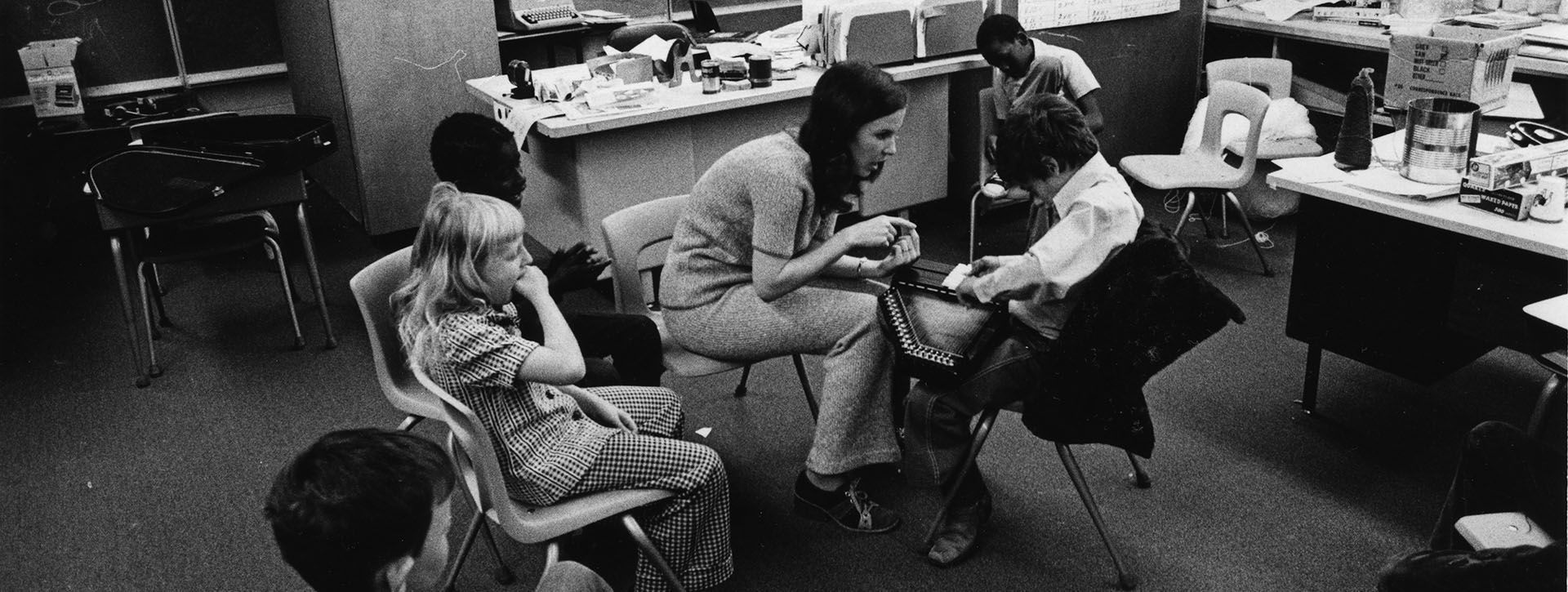
The Education for Handicapped Children Act (renamed the Individuals with Disabilities Education Act, IDEA, in 1990) guarantees a free, appropriate public education for all children with disabilities. IHDD served preschoolers from its inception. In 1975, a mobile unit provides diagnostic and educational services for young children living in rural areas.

-
Georgia’s first in-home intervention program for families of infants with disabilities is established.
-
IHDD conducts a needs assessment in six Georgia counties focused on aging people with disabilities. It is the first effort in Georgia to understand the service needs of an aging population. In the 1980s and 1990s, IHDD uses the arts to include seniors with lifelong disabilities in senior centers and builds collaboration between Georgia’s aging and disability service networks.

-
Parent Helpers is established as the first Georgia program offering peer support to families of newly diagnosed children with disabilities. The program merges with Parent to Parent of Georgia in 1982. IHDD disseminates the model nationally in 1984 and internationally through the Air Force in 1986. Also, IHDD hosts the regional activities of Marc Gold, whose innovative training strategies demonstrate that individuals with the most significant disabilities can be employed.
-
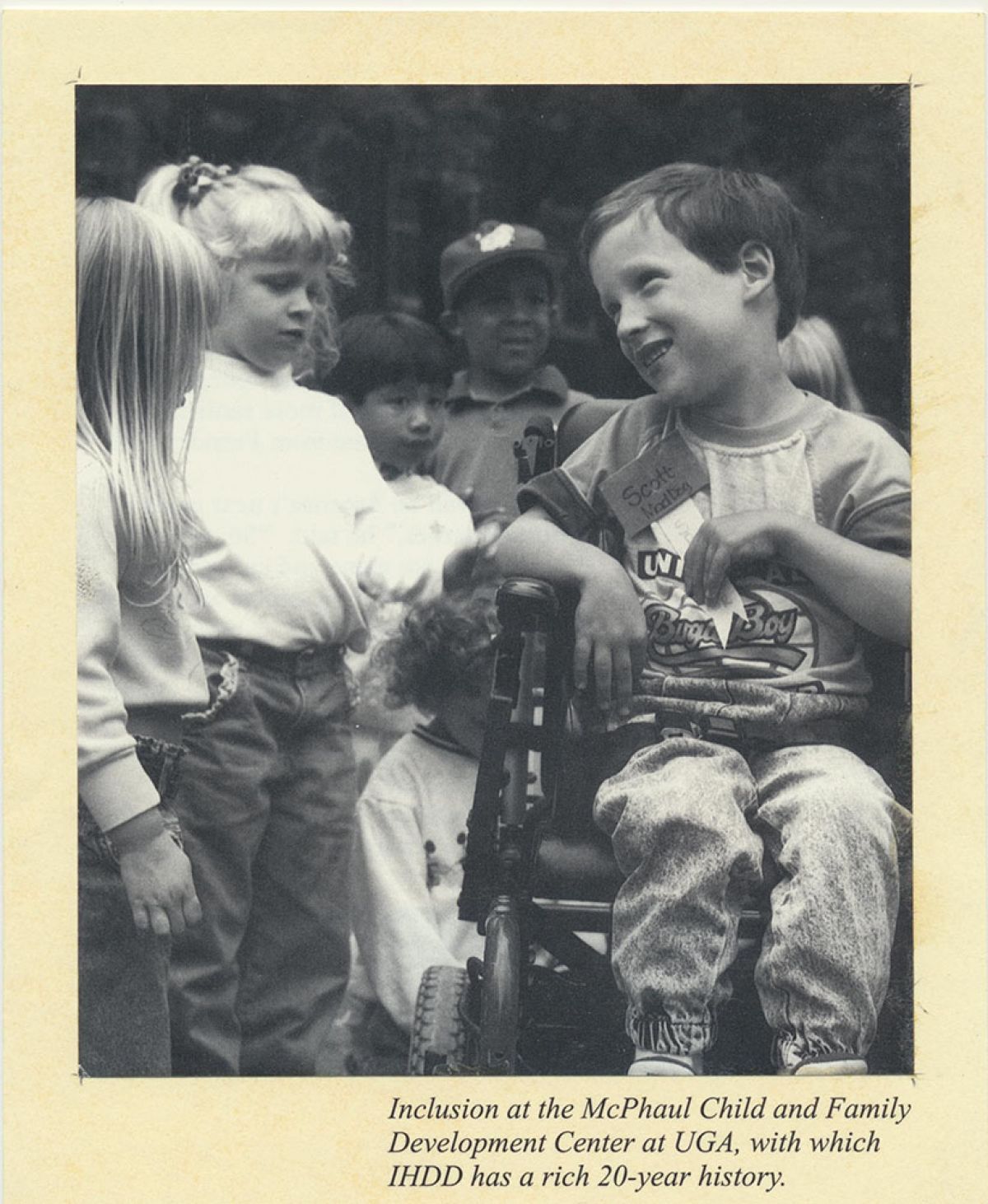
IHDD begins to include children with disabilities at the Child Development Lab at the McPhaul Center, culminating in 1985 with the establishment of one of the state’s first inclusive preschool programs.
-
The Americans with Disabilities Act becomes law, a far-reaching law providing civil rights protections to people with disabilities.

-
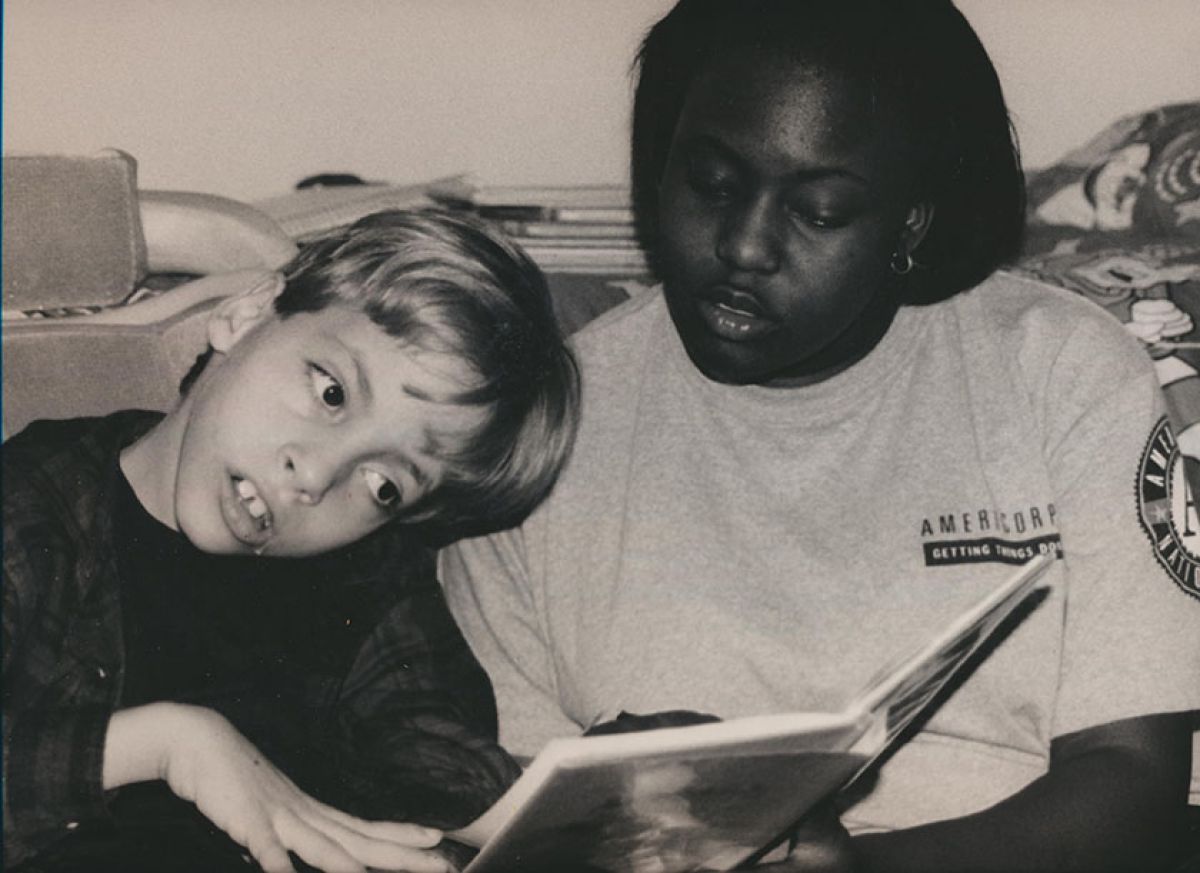
The IHDD Consumer Advisory Council holds its first meeting. Also, the Georgia Personal Assistance Corps, one of the first AmeriCorps projects, is funded as one of three corps actively recruiting people with disabilities to provide service to their communities. In 2001, Everyone Can Serve disseminates the inclusive service model nationally.
-
River’s Crossing becomes the first Georgia institution for individuals with disabilities to close; students who moved to the community are followed for 10 years by IHDD researchers, with very positive outcomes documented.

-
IHDD officially becomes an institute.
-
The U.S. Supreme Court rules in the landmark Olmstead case that under the Americans with Disabilities Act, isolating people with disabilities in segregated residential institutions constitutes discrimination based on disability. The case, which originates in Georgia, is a major victory for disabilities rights advocates. IHDD becomes the primary supporter of People First of Georgia, a self- advocacy network, and takes responsibility for assisting self-advocates in coordinating the next 11 annual statewide People First conferences.

-
IHDD supports Lois Curtis and Elaine Wilson, the plaintiffs in the Olmstead case, to develop small businesses: Lois as a folk artist and Elaine as a public speaker.
-
The first IHDD classes are offered at UGA.
-
The Children’s Freedom Initiative is formed. CFI is a collaborative effort to ensure that children who live in facilities are given the chance to live with permanent, loving families. Also, FarmAgain’s AgrAbility project is funded. It is designed to assist farmers and other agricultural workers with disabilities and chronic health conditions with assistive technology solutions.

-
Graduate and undergraduate Disability Studies Certificate programs are approved. The first three students graduate with Disability Studies Certificates in 2008.

-
IHDD, the UGA Richard B. Russell Special Collections Libraries and the Shepherd Center in Atlanta found the Georgia Disability History Alliance to preserve the state’s disability history. GDHA sponsors an annual Disability History Symposium.

-
The Destination Dawgs program for students with intellectual and developmental disabilities is launched. The first cohort of five students receive a Certificate in College and Career Readiness and the group is recognized at both FACS Convocation and UGA Commencement in May 2019. More than 80 UGA students have served as peer mentors since spring semester 2019.

-
IHDD turns 50.

-
Kevin Tanner (left), now commissioner of the Georgia Department of Behavioral Health and Developmental Disabilities, chairs the Georgia Behavioral Health Reform and Innovation committee that provides recommendations that led to the passing of House Bill 1013 in 2022. The bill addressed systemic barriers to the quality and delivery of behavioral health services and required insurance companies to cover mental health and substance abuse issues as they would physical illnesses.

-
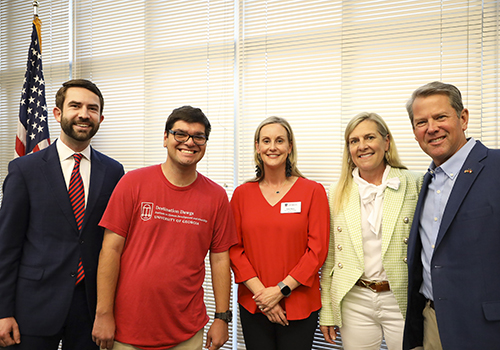
The Georgia Legislature passes a bill that covers tuition for students in IPSE programs, similar to the HOPE Scholarship program. Destination Dawgs student Ben Harrison and director Lisa Ulmer attend the signing ceremony with local representative Houston Gaines, an early advocate of the program going back to his time as president of the UGA Student Government Association. They are shown here with Georgia Governor Brian Kemp and his wife, Marty.
-
Georgia Governor Brian Kemp signs the Georgia as Model Employer (GAME) legislation into law. GAME was created to increase the recruitment, hiring, promotion and retention of individuals with disabilities within state of Georgia employment. Shown here are IHDD's Doug Crandell, a Public Service Faculty and Director of the Advancing Employment project, Charlotte Densmore and D’Arcy Robb from the Georgia Council on Developmental Disabilities and Senator Billy Hickman, who carried the bill.
In 2025, the Georgia Dignity and Pay Act (SB 55) mandates that employers in Georgia pay individuals with disabilities the full minimum wage, eliminating the practice of paying subminimum wages. IHDD's Doug Crandell is a major champion of the legislation.

-
The Georgia General Assembly allocates $1.5 million for the establishment of the David Ralston Center for Behavioral Health and Developmental Disabilities to prepare future professionals for careers in the behavioral health and developmental and intellectual disabilities fields with the goal of creating a pipeline to provide a community-based system of care.
-
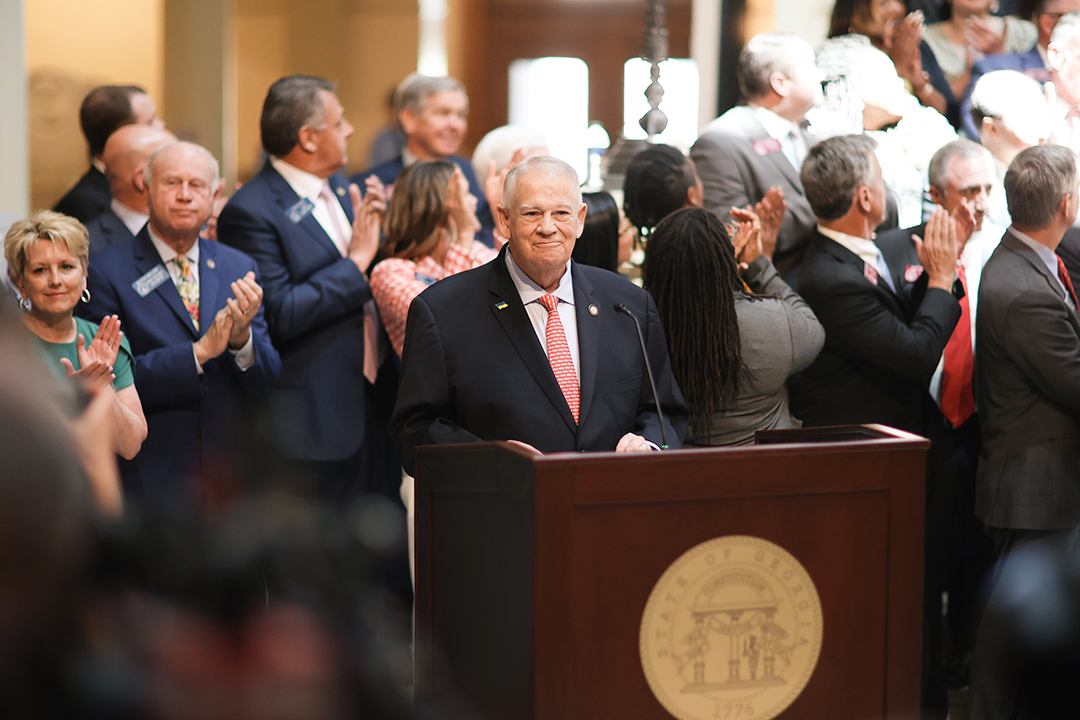
The university formally dedicates the Ralston Center for Behavioral Health and Developmental Disabilities, to be housed in the UGA College of Family and Consumer Sciences.
-
A master’s program in Couple and Family Therapy (CFT) is approved by the University System of Georgia, designed to train future clinicians to address the growing mental healthcare provider crisis. The program is housed in the UGA College of Family and Consumer Sciences.
-
UGA formally renames the Center the David Ralston Institute for Behavioral Health and Developmental Disabilities within the University system framework. The College of Family and Consumer Sciences launches a search for an executive director.

-
The College of Family and Consumer Sciences begins recruitment and hiring of key subject-matter experts and executive staff for the Ralston Institute.
FACS begins creating messaging for bachelor's-level students in Psychology, Social Work, and Human Development and Family Science to share career pathways in the behavioral health field.
The Ralston Institute joins a national alliance of university Centers of Excellence focused on advancing the behavioral health workforce.
